
What Online School Actually Changes
Online school removes the commute, the fixed bell schedule, and - depending on the program - a good chunk of the social noise that comes with a building full of several hundred other students. For a student who learns better at their own pace, or who has a schedule that doesn't fit a traditional day (competitive sports, a part-time job, a health condition), that flexibility can be the entire reason it works.
What it doesn't remove is the need for structure - it just relocates who's responsible for providing it. A traditional school supplies structure automatically: bells ring, teachers call on you, classmates notice if you're behind. Online school hands that responsibility to the student and, often, the family. For a self-directed learner that's a feature. For a student who needs external structure to stay on track, it can quietly become the hardest part of the whole arrangement.
What In-Person School Actually Changes
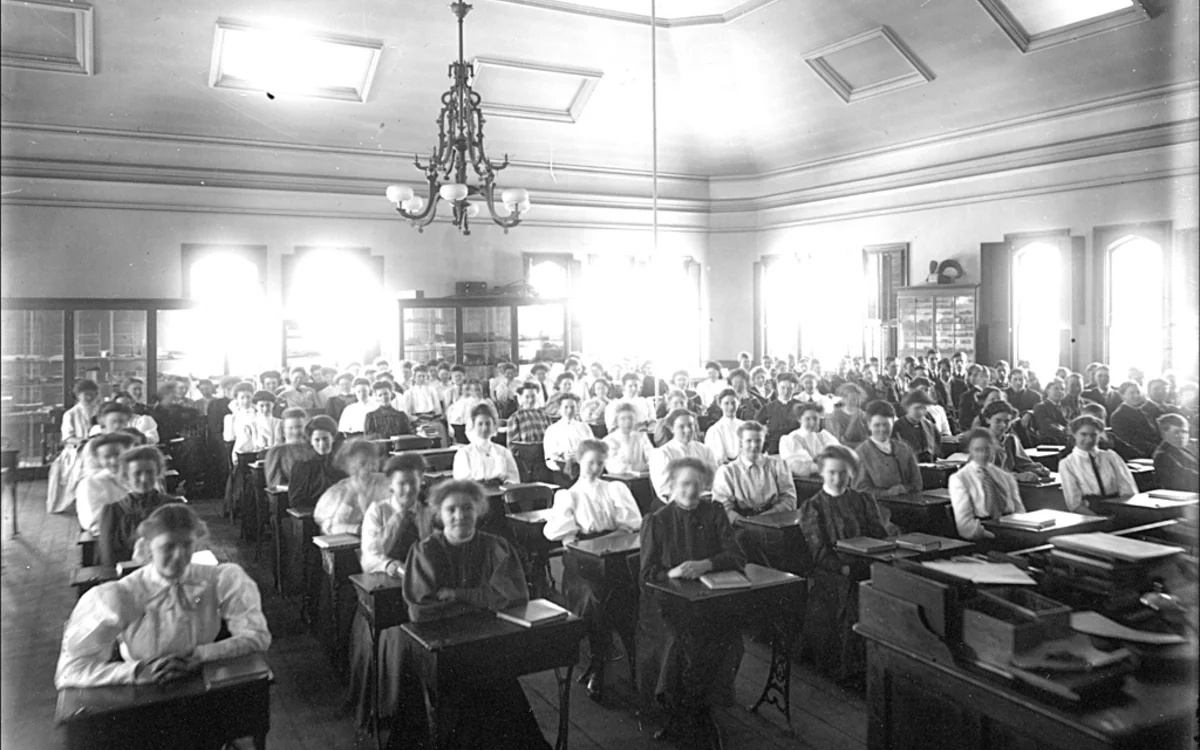
A physical classroom supplies built-in social contact, immediate feedback from a teacher standing a few feet away, and a daily rhythm that doesn't require anyone to build it from scratch. Group projects, lab work, sports, clubs and the general low-stakes practice of just being around peers every day all happen more naturally in person than they do through a screen.
The cost is less control over pace and environment. A student who grasps a concept in five minutes still sits through the full lesson built for the whole class, and a student who needs more time doesn't always get it before the class moves on. Distractions are social instead of digital - friends, hallway noise, a disruptive classmate - but they're still distractions.
Academic Pace: Self-Paced vs Fixed-Pace
| Online School | In-Person School | |
|---|---|---|
| Pace | Often self-paced or flexible | Fixed to the class schedule |
| Structure source | Student / family must build it | Built in by default |
| Social contact | Limited, often scheduled separately | Daily and constant |
| Feedback speed | Depends on program, often async | Immediate, in real time |
| Best fit for | Self-directed, flexible-schedule learners | Students who thrive on routine and in-person contact |
The Social Piece Nobody Wants to Overstate or Ignore
It's easy to overstate the social risk of online school - plenty of online students have active friend groups through sports, hobbies, and local activities outside class. It's also easy to understate it, because a classroom genuinely provides daily, low-effort social contact that has to be deliberately replaced if it isn't happening somewhere else. The honest middle ground: online schooling doesn't automatically create isolation, but it does remove a default source of social contact that has to be filled in on purpose, not assumed away.
Local co-ops, community sports leagues, and part-time programs are where most families end up filling that gap, often more deliberately and with more variety than a single school's social scene would have provided anyway.
Questions Worth Asking Before Choosing
Rather than asking which format is objectively better, a more useful set of questions looks at the actual student in front of you. Does this student start assignments without being reminded, or do they need an adult or a bell to get moving? Do they have an existing social outlet outside of school hours? Is there a reliable adult available during school hours to help if something goes wrong with the online platform or the workload?
None of these questions have a universally right answer - they're meant to surface which format's weaknesses would actually matter for this particular kid, rather than which format sounds better in the abstract.
Talking to a current family in each format, rather than relying only on a school's own marketing material, usually surfaces the practical day-to-day details that a brochure never mentions.
Hybrid Isn't a Compromise - It's a Third Option
A growing number of districts and charter programs now offer hybrid models: some days in a physical classroom, some days online, sometimes with in-person electives alongside fully online core classes. This isn't a watered-down version of either format - for some students it's a genuinely better fit than either pure option, combining scheduled social contact with some of the pacing flexibility online programs offer. It's worth checking what's actually available locally before assuming the choice is strictly binary.
Cost Is Rarely the Deciding Factor People Expect It to Be
Public online schools and public in-person schools are both typically free, funded the same way through state and local education budgets, so cost usually isn't the dividing line people assume it is. The bigger cost difference shows up in private or specialized programs, where a private online academy and a private in-person school can land in a similar price range once technology fees, materials, and any required proctoring costs are added to an online program's tuition.
A Switch Isn't Permanent, and That's Worth Remembering
One thing that gets lost in this decision: it rarely has to be permanent. A student who struggles with online school's lack of built-in structure for a semester can switch back to in-person, and a student who feels overwhelmed by a crowded in-person schedule can try an online or hybrid program for a term. Treating the first choice as reversible, rather than a life-defining decision, takes a lot of unnecessary pressure off a decision that's genuinely hard to get right on the first try anyway.
Frequently Asked Questions
- Is online school academically rigorous enough for college admissions? Accredited online programs carry the same weight as accredited in-person schools in most college admissions processes. The accreditation is what matters, not the delivery format.
- Do online students miss out on extracurriculars? Many online programs offer their own clubs and virtual extracurriculars, and some students participate in local community sports or activities alongside an online academic schedule.
- What's the biggest sign online school isn't working for a student? Consistently missed or late assignments despite reminders is usually the clearest sign the self-directed structure isn't a good match yet, more so than grades alone.
- Can a student switch between online and in-person mid-year? In most districts, yes, though timing and available seats vary by program. Checking the enrollment window for the specific school before assuming a switch is possible at any point saves a lot of last-minute scrambling.
The Bottom Line
Neither format wins in general. Online school rewards self-direction and flexible scheduling; in-person school supplies structure and social contact by default. The decision that tends to hold up over time is the one made by matching the format to the actual kid - how they handle unstructured time, what social contact already exists outside school, and whether support is available if the chosen format needs adjusting partway through the year. A choice made against those specifics, rather than against a general opinion of either format, is far more likely to still look right a year later.